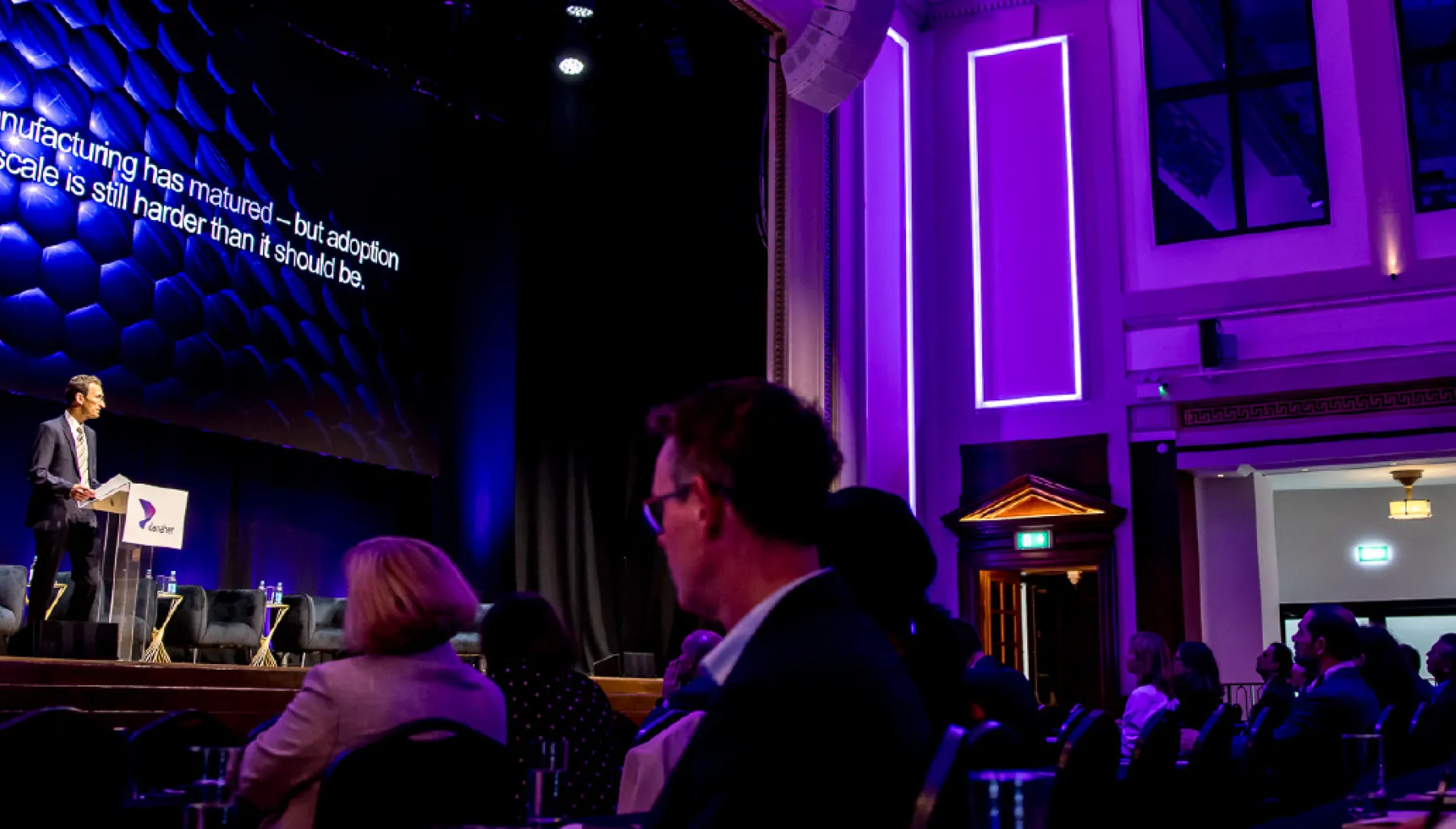
Our speakers and panelists had candid, substantive conversations about where the industry stands today and what it will take to scale the next generation of advanced therapies to reach all the patients who need them.
Here are some of the biggest ideas from this year's Summit.
The old manufacturing playbook no longer fits.
Biomanufacturing was built for large batches of standardized therapies. The next generation of medicines—cell and gene therapies, targeted and complex biologics, n-of-1 treatments—doesn't fit that mold. As molecular diversity increases, the field is shifting toward smaller, parallel and distributed systems that can flex to meet the complexity of individualized medicine. This means faster decision-making, new investment models, and process designs that are data-driven and purpose-built from the start rather than adapted from previous playbooks.
Manufacturing can no longer be treated as a downstream problem. It has to be part of the scientific conversation from day one.
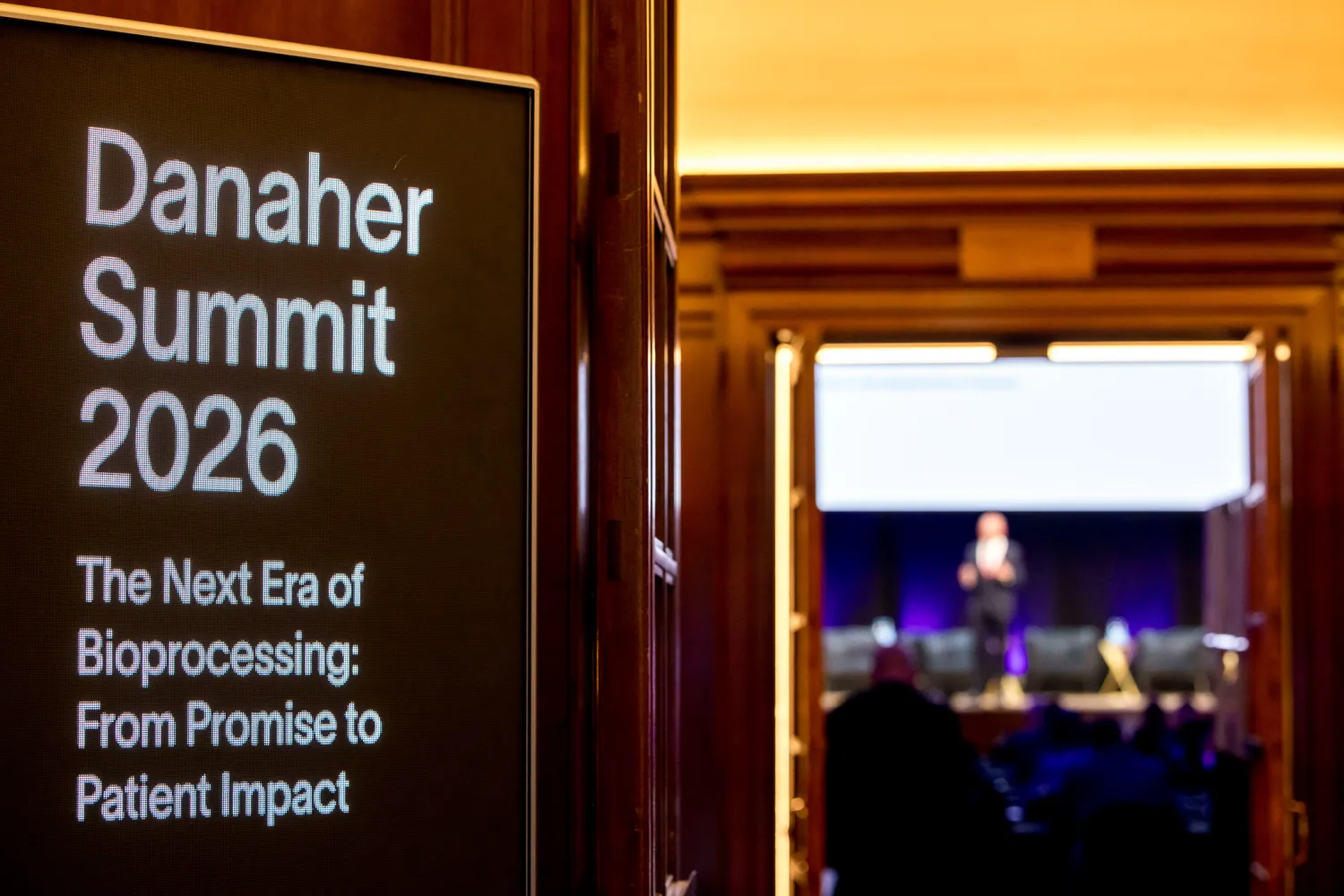
Automation and AI are making personalized scale possible.
For years, the promise of personalized medicine ran into a hard wall: you can't manufacture one patient's therapy the same way you manufacture a million doses of a traditional drug. Integrating automation, AI and high-throughput experimentation is changing that equation.
These tools are enabling a shift from large-batch production to small-batch and even patient-specific manufacturing while improving efficiency, regulatory consistency, and access to advanced therapies. AI and digital tools are also compressing process development timelines, making it possible to design more tailored, adaptive manufacturing approaches without sacrificing rigor.
Prediction is becoming a competitive advantage.
The organizations gaining ground are not merely reacting to problems faster but actually anticipating them. Digital twins powered by integrated data are helping teams model outcomes before committing resources, accelerating timelines and reducing risk. And real-time, molecular and submolecular-level data – shared across interoperable systems – are enabling more precise, proactive decision-making at every stage of development and manufacturing. Investing in this area with critical infrastructure is key.
Breakthroughs require collaboration across the whole ecosystem.
The most consistent theme across both days of the Summit was this: no single organization can accomplish what’s needed alone. Partnerships across academia, industry, and regulators are accelerating how all kinds of therapies, especially gene therapies, move from discovery to approved treatment. Earlier alignment between developers, manufacturers and regulators is reducing friction and compressing timelines.
What makes these partnerships work is not goodwill alone but transparency, shared incentives, and data-driven collaboration that keeps everyone oriented around the same outcomes. The organizations making the most progress are those treating collaboration as a core capability.
Regulatory models are evolving with the science.
Most of the frameworks that currently govern drug development were built for an earlier era of medicine. As therapies grow more complex and more personalized, those frameworks must change. Early engagement and risk-based approaches are helping bring complex therapies to patients faster without compromising scientific rigor. For rare diseases, which collectively affect an estimated 300 million people worldwide, tailored regulatory pathways are becoming essential.
Our speakers noted that regulators are not the obstacle they're sometimes assumed to be: they want to move faster too, and building the right collaborative infrastructure makes that possible.
Sustainability is now a procurement requirement, not a values statement.
Environmental and social criteria are moving from corporate commitments into day-to-day supplier decisions. Organizations are integrating sustainability standards into procurement frameworks, requiring verified supplier commitments and shared performance targets as part of doing business.
Far from being separate from operational strategy, this is part of building supply chains resilient enough to support long-term innovation at scale. Progress toward net-zero goals, Summit participants agreed, accelerates when sustainability is wired into commercial relationships rather than managed alongside them.
Our biggest Summit takeaway: The science is not the problem.
Across two days and dozens of conversations, one conclusion kept surfacing: the biopharma industry has the tools, the knowledge and the therapeutic breakthroughs to transform how medicine is made and delivered. What it lacks is the collective will to operationalize them at speed. The next phase of progress will be won in manufacturing facilities, in regulatory negotiations, in supplier contracts and in the partnerships that connect all of them.